
Africa Didn't Follow the World's Lead on Plastic. It Set the Standard.
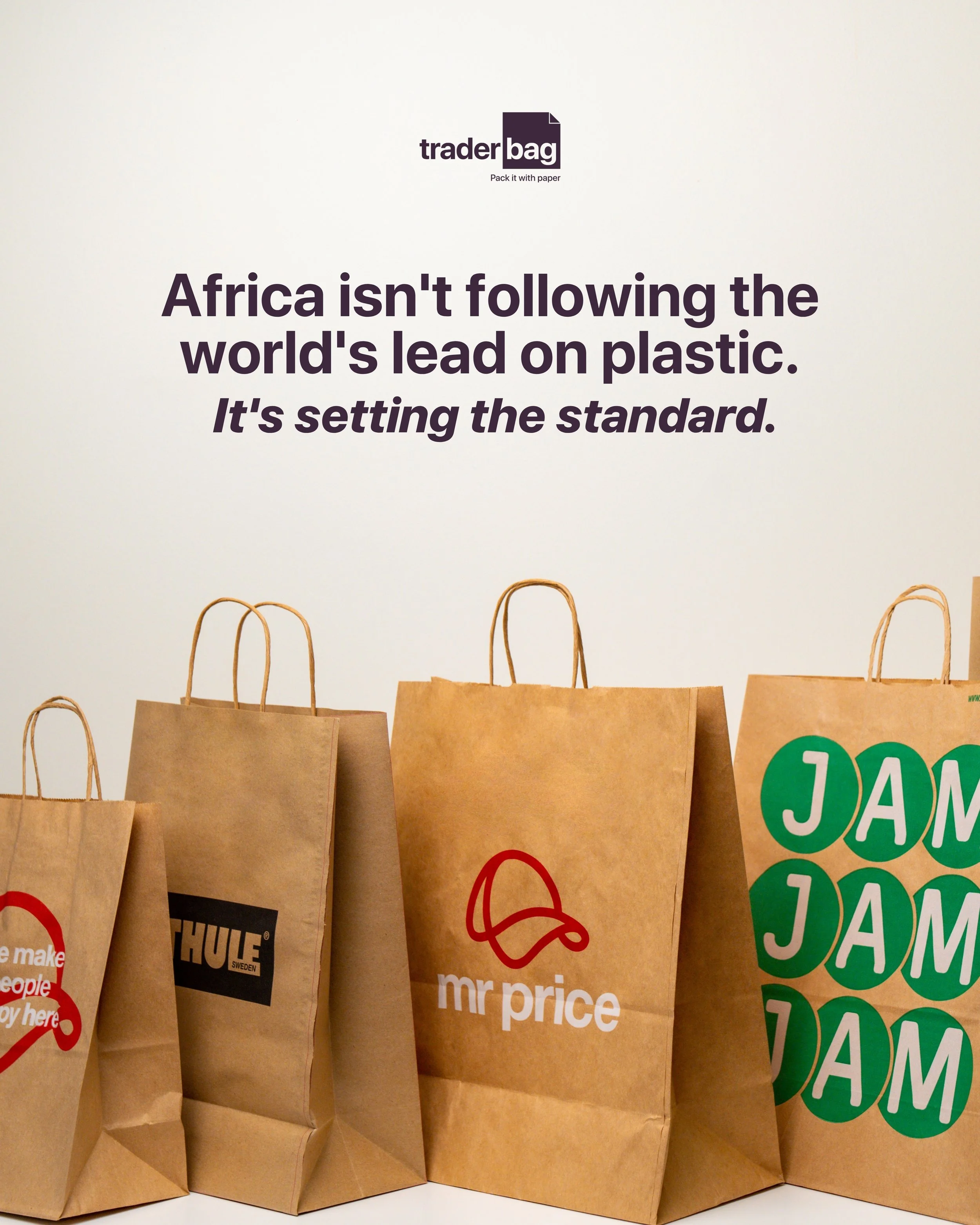
While much of the world spent years deliberating over plastic regulation, Africa was already acting. Not tentatively. Not with pilot programmes or targets twenty years out. With legislation, enforcement, and consequence.
The evidence is not ambiguous.
Rwanda made history in 2008 by becoming one of the first countries globally to completely ban plastic bags, as part of the country's ambitious Vision 2020 sustainability plan. Today, Kigali is widely celebrated as one of Africa's cleanest cities, with plastic bags virtually non-existent on its streets and in its markets. Rwanda's approach was deliberate; government officials framed the country as a first mover in environmental action, believing it would drive innovation and position Rwanda ahead of new technologies.
Kenya followed with what has been called the world's strictest plastic bag ban in 2017, with penalties including fines of up to $40,000 or four years in prison for violators, targeting manufacturers, suppliers, and users alike. That wasn't just legislation. That was a signal to the market: the old model is finished.
The momentum has not slowed. It has accelerated.
2025: The Regulation Wave Hits
If any business was still treating Africa's plastic regulations as a distant concern, 2025 removed that comfort. Across the continent, governments have introduced a wave of new packaging regulations focusing on extended producer responsibility (EPR), bans on single-use plastics, and the harmonisation of technical standards.
Kenya's Sustainable Waste Management Act came into effect on 5 May 2025, requiring producers and importers of packaging to manage their goods through the full lifecycle of the product, including collection and recycling. This is lifecycle accountability with teeth. It’s not enough to sell a product. You are now responsible for what happens to its packaging after it leaves your hands.
The East African Community, comprising Burundi, Kenya, Rwanda, Tanzania, and Uganda, formally notified the World Trade Organisation of newly adopted packaging standards covering food-contact materials. Regional harmonisation of this kind raises the floor for every business operating across these markets.
Nigeria enacted a nationwide ban on plastic straws, cutlery, sachets, bottles, and expanded polystyrene in January 2025. Ethiopia's parliament unanimously passed legislation banning the import, production, and use of single-use plastic materials in June 2025. Ghana announced plans to prohibit the import, manufacture, and use of polystyrene foam food containers on World Environment Day.
This is not a regional trend. This is a continental reckoning.
South Africa: The Pressure is Building
South Africa has been moving in this direction for years, and the pace is picking up.
South Africa's amended plastic bag regulations set compulsory minimum recycled content targets: 50% post-consumer recyclate from January 2023, 75% from 2025, and 100% by January 2027. Retailers and brand owners who rely on plastic bags are already operating under these obligations. The costs and the compliance burden are real and rising.
South Africa's environment ministry has signalled stricter enforcement of packaging EPR rules and is exploring deposit-refund systems for waste streams that are underperforming against recycling and collection targets. The government's direction is clear. Businesses that are still waiting for certainty before making the switch are running out of time to act on their own terms.
Major South African retailers have already begun responding strategically, introducing branded reusable bags as compliance tools and marketing assets, replacing lightweight plastic films in fresh food departments, and redesigning shelf-ready packaging to reduce plastic content. The commercial case for sustainable packaging is no longer theoretical. It is embedded in procurement decisions and supplier selection across organised retail.
Paper Isn’t a Compromise. It’s an Upgrade.
There is a version of this story where the shift away from plastic is framed as sacrifice. Where brands reluctantly accept a trade-off between compliance and quality. That version is wrong.
Paper packaging is a competitive advantage. It’s a brand touchpoint that communicates values clearly and credibly at the moment of purchase. It’s durable, printable, and customisable. And in a market where consumers are increasingly making decisions based on what a brand stands for, walking out of a store with a well-made paper bag is no longer a niche experience. It’s an expectation.
At Traderbag, we’ve built our business around this moment. We supply high-quality paper bags to South African retailers who understand that packaging is not a back-office procurement problem. It’s part of how a brand is experienced.
We’re not asking brands to catch up with Africa's regulatory direction. We’re helping them get ahead of it. The transition to paper is happening. The only question is whether your business leads it or scrambles to follow.

The Standard Has Been Set. The Question Is Whether You Meet It.
Africa has demonstrated, repeatedly and at scale, that decisive action on plastic is not only possible but commercially and environmentally sound. The legislation is real. The enforcement is intensifying. And the consumers walking through your doors are paying attention.
If your packaging still says plastic, it’s time to change what it says about you.
Traderbag is ready when you are. Reach out to our team and let's talk about making the transition seamless for your brand.
