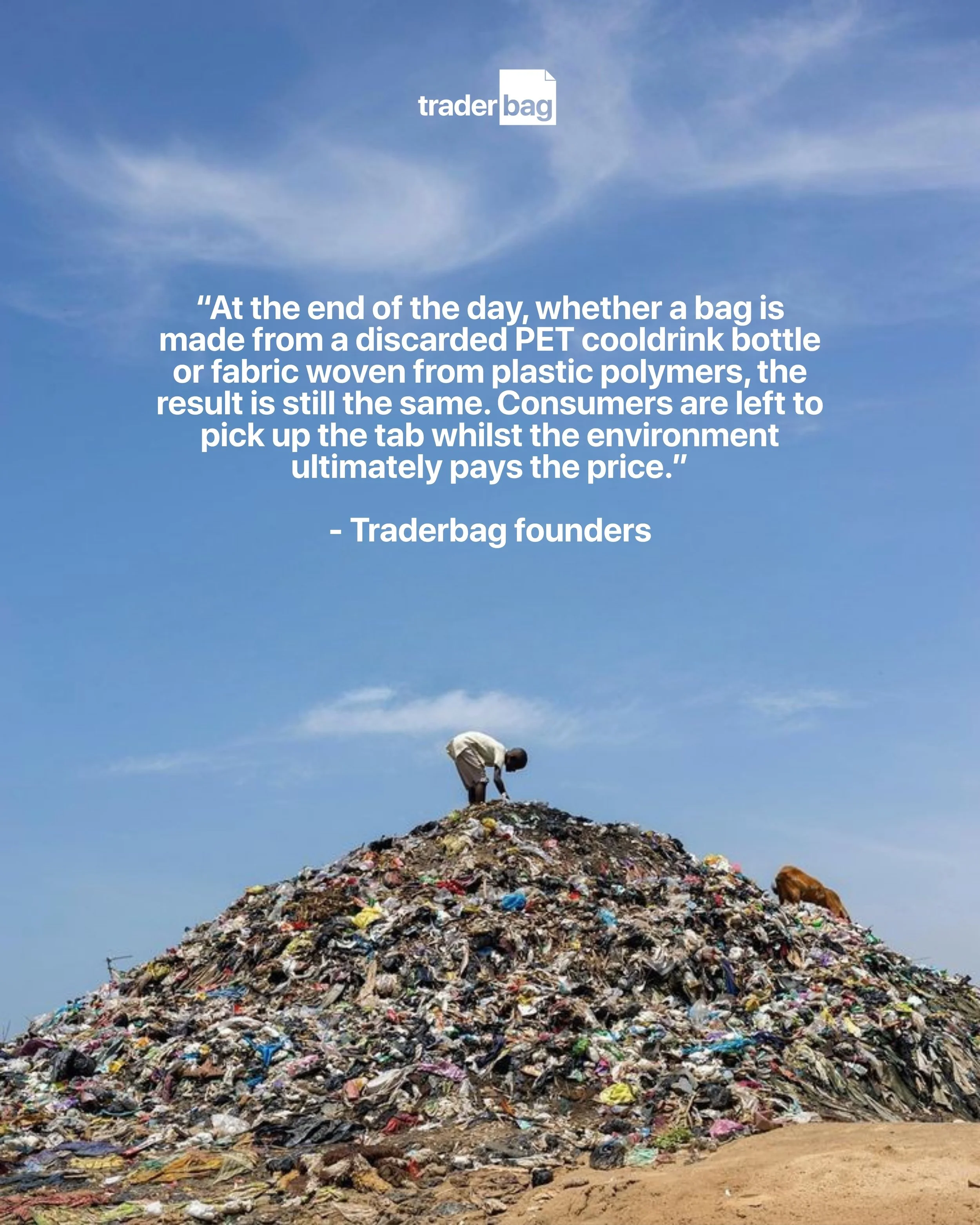
The Myths We Print on Our Plastic Bags
Every day, up to 80% of consumers forget to reuse the plastic shopping bags they take home from the till. Many don't feel too bad about it, because the bag said it was recycled. It said it was recyclable. Job done.
Except it isn't.
That's the uncomfortable truth at the centre of a recent Bizcommunity feature spotlighting Traderbag and the plastic bag myths that have been quietly accepted as fact. Whether a bag is made from a reclaimed PET cooldrink bottle or fabric woven from plastic polymers, the outcome remains largely the same: consumers carry the cost, and the environment carries the consequences.
"We're printing our excuses on our packets"
As Daniel Cherry, co-director of Traderbag, puts it: the recycled and recyclable claims on plastic bags almost always come with conditions buried in the small print. Conditions most shoppers never read, and most waste systems can't actually meet.
Thin plastic bags require specialised recycling facilities. They tangle in sorting equipment. They're rejected when contaminated by food or liquid. In South Africa, just 14% of single-use shopping bags are successfully recycled. The rest end up in landfill, waterways, or broken down into microplastics that persist in the environment for hundreds of years.
Recycling, in other words, delays the damage. It doesn't stop it.
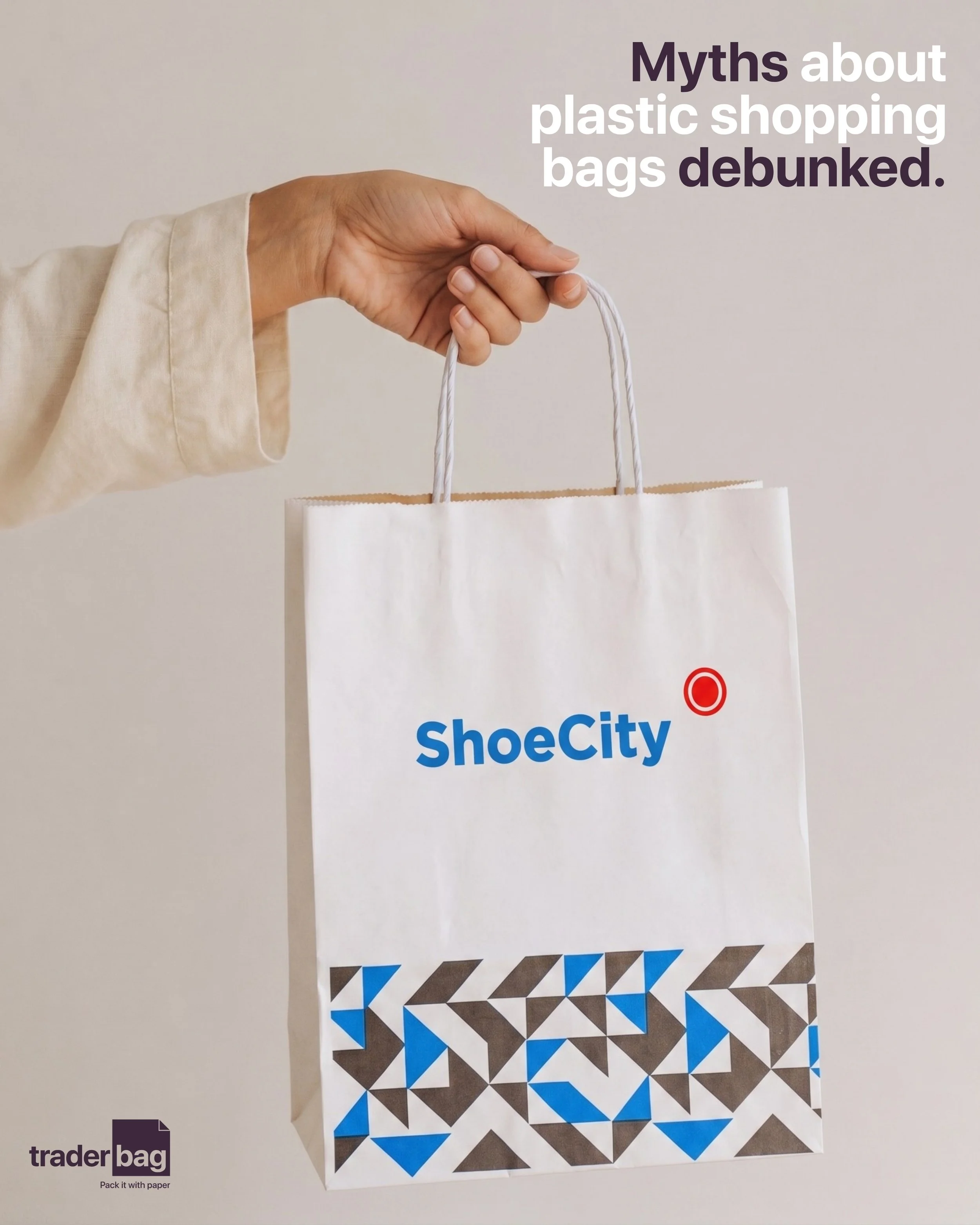
Paper holds up under scrutiny
Paper is the most recycled material in the world. A paper bag can be recycled up to 7 times, compared to three or four cycles for plastic. When paper fibres eventually shorten beyond use, the material is biodegradable and compostable. When plastic degrades, it fragments into microplastics that are consumed by marine animals and continue to contaminate land and water indefinitely.
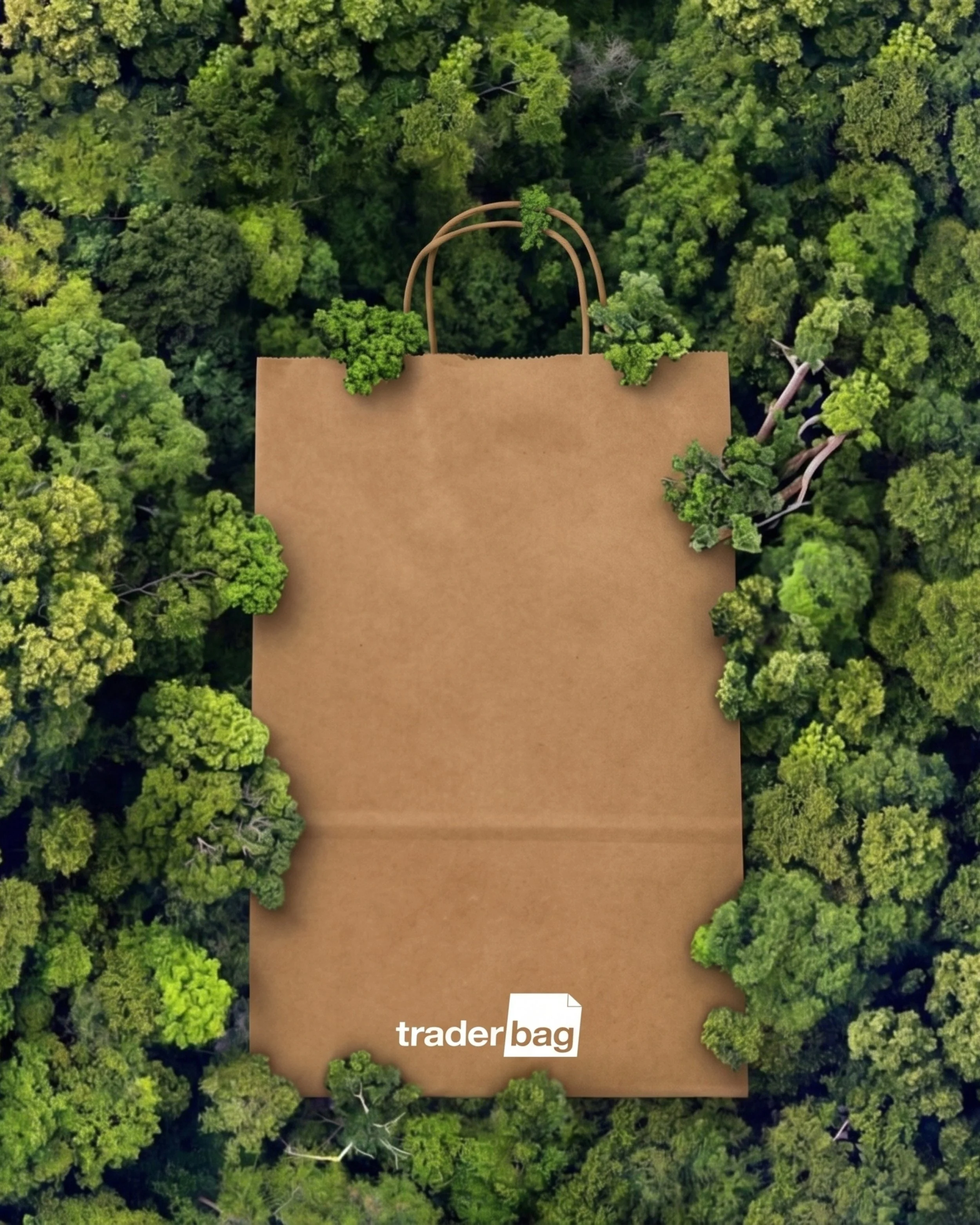
Traderbag's bags are FSC-certified, locally produced, and printed with water-based inks, making them fully recyclable from the moment they leave the store.
The switch is happening, and shoppers are on board
More than 100 countries, including 34 across Africa, have already banned single-use plastic shopping bags. South Africa's legislation continues to evolve, but retailers don't need to wait for a mandate to act.
A trial run by Traderbag alongside a discount fashion retailer found that even lower LSM shoppers were willing to pay a small premium for a paper alternative. The bags sold out within days. That retailer is now stocking them as standard.
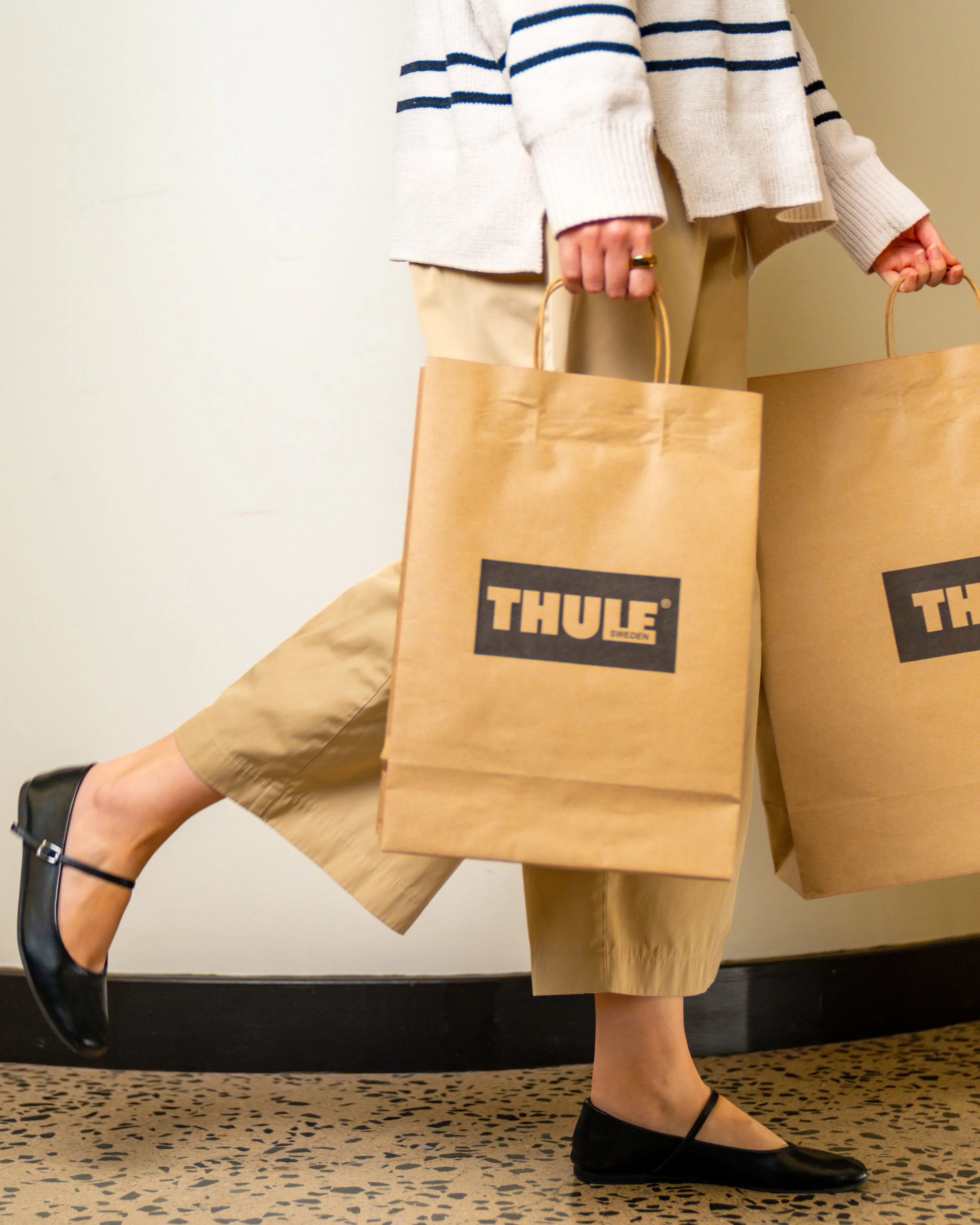
South Africa's largest apparel retailer has already made the switch in full, replacing plastic with paper across its stores. More fashion retailers are following. Traderbag is also working on paper-based alternatives to the plastic wrapping used to protect garments in transit.
A South African supply chain, built for scale
South Africa is the largest plastics producer in Sub-Saharan Africa, with packaging accounting for 49.4% of all plastic consumption. The volumes involved are significant: some chains use up to 50 million shopping bags per month.
Traderbag has built its supply chain to meet that demand. Working closely with suppliers in Johannesburg and Durban, the company brought in specialised machinery to manufacture customised paper bags locally. The entire operation is South African, from sourcing to production.

The opportunity is here
The price gap between plastic and paper is small and narrowing. The reputational and regulatory pressure on retailers is growing. And consumer appetite for a better option, even at a slight premium, is already proven.
For retailers ready to make the move, Traderbag offers a practical, scalable, and brand-enhancing alternative.
Read the full Bizcommunity article here: https://www.bizcommunity.com/article/myths-about-plastic-shopping-bags-debunked-623801a
To find out more about switching to paper, visit www.traderbag.co.za